We Need To Talk About AI Menus
Words: Maggie Fagan
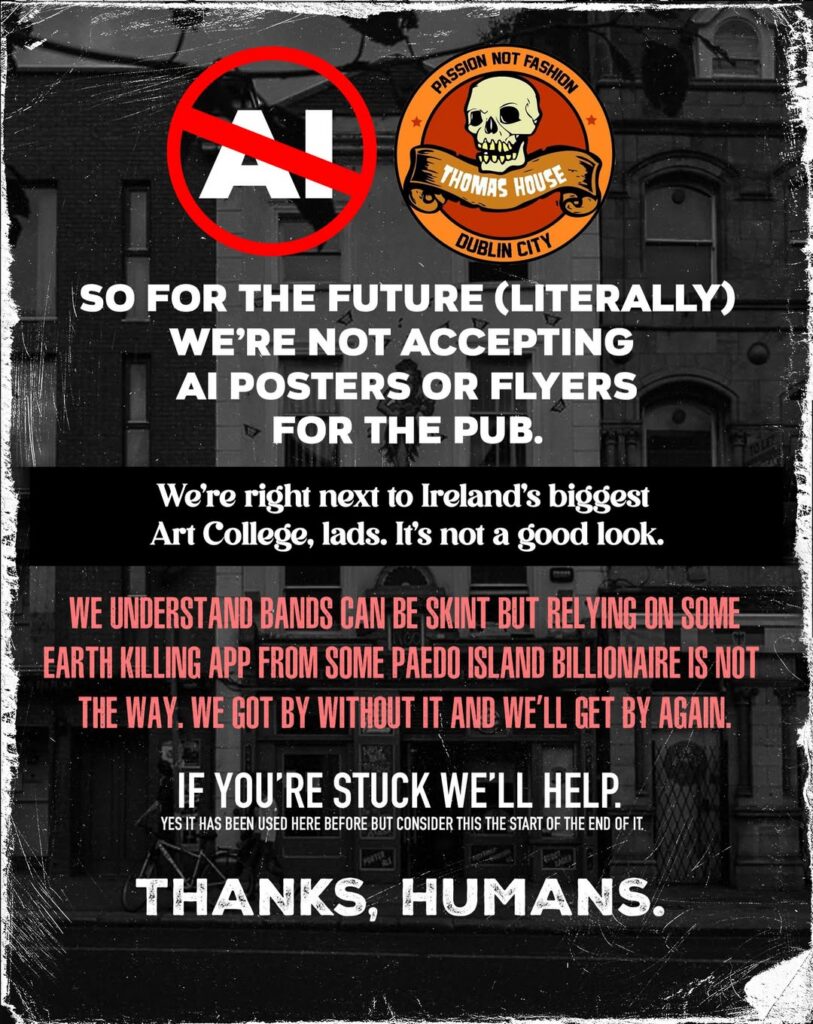
Last week, The Thomas House announced that it has banned AI-generated gig posters. In an article yesterday by The Irish Independent, the pub stated that they “started seeing people with six fingers” in flyers. They expressed that they understand that bands can be broke, but using an earth-killing app to create art is not the way forward.
The Thomas House incident is just a small symptom of a much wider problem. AI generated content is cropping up at alarming rates, from places you wouldn’t expect. The Thomas House is a punk rock boozer on the same street as one of Ireland’s most prestigious art colleges, no doubt filled with budding graphic designers who could put together a gig poster in an afternoon. If they can fall victim to it, even by mistake – who else can?
Well, restaurants can, and have, been falling into the trap of using AI across the country.
AI-generated menus, social posts, and promotional graphics are becoming increasingly ubiquitous in the dining scene. While they’re admittedly quick and free, they raise a question that restaurants should be asking themselves: what exactly are you saying about your business when your menu looks like it was generated by a robot in circa 14 seconds?
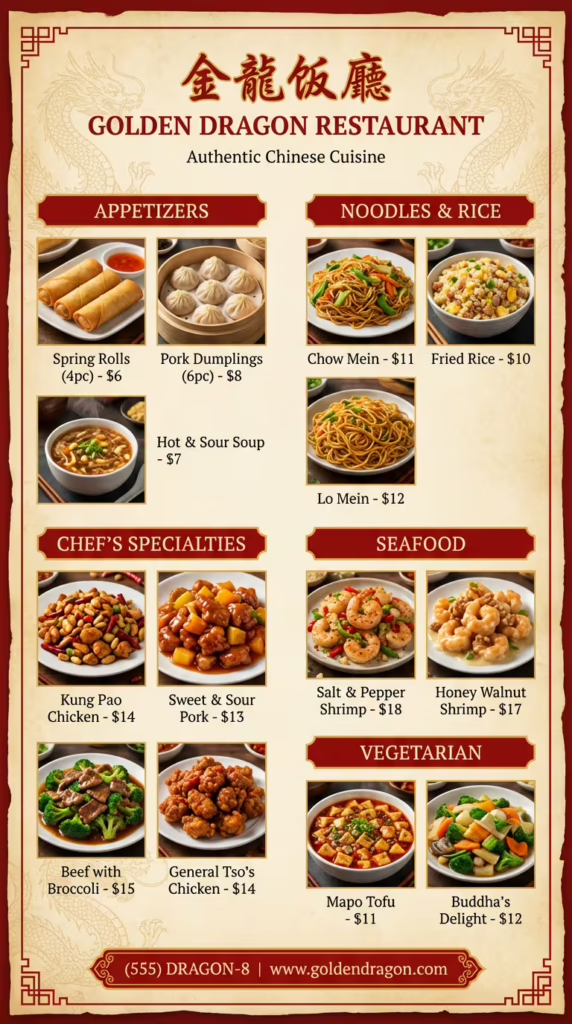
Recently, a very wholesome little grass-roots food business on Dublin’s Northside posted an AI graphic promoting a weekly pop-up of theirs. It included a very clearly AI generated image of the food on offer, and the details of the event were dotted around in that lazy infographic format that is everywhere right now. The whole post elicited zero personality. It was the last imagery you would expect to see from a business built on wholesomeness.
Perhaps the folks behind this business are not very tech savvy. Perhaps they think that people won’t notice, or [god forbid] think that it actually looks good. In those moments you can understand, and give a little grace to the boomers. But when businesses who are clearly social media savvy, with poppin’ instagram pages, and queues out the door use AI slop for menus, they need to do better.
Time magazine have stated that AI could use as much water as 1.3 billion people by 2030. That’s fucking scary. We need to do better.
Anything is better than AI slop. You don’t need to be a computer whiz to knock out a menu on a laptop. Heck, some of the best restaurants in the city have menus written in iconic Microsoft Word fonts. It’s charming, albeit a bit clunky, but most importantly it’s real. AI feels icky, and elicits that uncanny valley feeling whenever we see it.
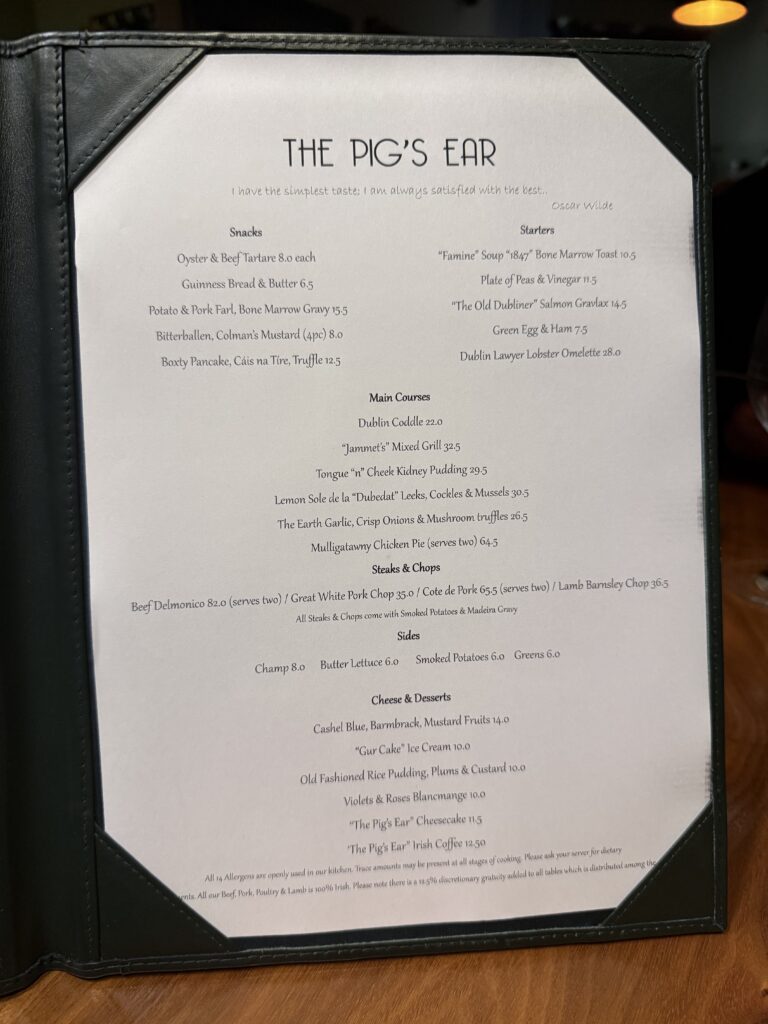
The reason why it all feels so icky when it comes to food is because hospitality is built on details. No doubt money is a major driver behind AI use. Running a food business is tough. 147 restaurants in Dublin alone shut up shop in 2024. Margins are tight. Not everyone can afford a professional photographer, a graphic designer or a swish marketing agency. However, while businesses are swimming upstream in the cost of living crisis, so are the customers. Now more than ever, folks need to be choosy about where they spend their hard earned money these days.
Diners don’t expect every restaurant to have magazine-quality photography. In fact, most people actively distrust overly polished food imagery these days, and AI even less so. According to Forbes’s 2024 report, at least half of customers said that AI imagery was a turn off.
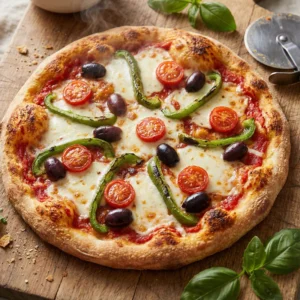
The irony is that authenticity has never been more valuable in hospitality, yet some businesses are choosing to present themselves through the least authentic medium imaginable. We notice when a restaurant bakes its own bread, or when menus change with the seasons.
These things matter because they signal care. AI imagery signals the opposite.
Like most things, this is a case-by-case issue. If you’re a chipper on Clanbrassil Street posting your opening hours, realistically, nobody’s going to lose sleep over it, albeit it’s still not ideal. However, if you’re positioning yourself as a neighbourhood gastropub, a family run café where everything is made from scratch, or a premium grocery service on a delivery app, then the standards should be higher.
You’re asking customers to trust your taste, to believe in your attention to detail, and ultimately to spend their hard earned cash. So why undermine all of that with AI slop?