Is Natural Wine for the People (Who Can Afford it)?
Hero Image: Luxmi Shanmuganantha
Words: Luxmi Shanmuganantha
It started as a pushback against industrialised, commercialised wine. An embracing of sustainable farming, small scale production and lack of pretension. Now it comes with a hefty price tag, its own elitist reputation, and smoked almonds that are inexplicably six euro. Who is natural wine for these days?
The wine industry is in a bit of a crisis. Young people don’t drink like they used to, climate change is bringing both raging heatwaves and flash storms that destroy large portions of the crop, and international tariffs are piling onto the chaos. Experts say wine is actually the people’s drink and should be rebranded as such, and that its future depends on cultural relevance.
The natural wine movement of the past few decades won back some drinkers by making wine more approachable, though at a similar, if not higher, price to its conventional counterpart. Today, with average rent in Ireland over €2,200 and grocery inflation reaching 6%, there is less and less room for these prices. So if you’re meant to enjoy a bottle of fermented grape juice casually outside a bar, cigarette and cheese plate nearby, why will the bill set you back nearly 50 quid?
So what’s all this low-intervention business about?
Today you may see a glass of chilled red and picture a wide-pant, tiny-sunglass, beanie-wearing wine drinker, but that wasn’t always the case. The contemporary natural wine movement originates in 1980s and 90s France, a group of winemakers got fed up with an industry that had gone all in on big brands, big machinery and a very long list of additives. They went back to basics instead: farm sustainably, intervene as little as possible, and let the grapes do their thing. The movement in many ways did push back against traditional wine elitism. It often rejected rigid geographical classifications, critics scores and formal drinking rituals.
That’s what makes the current mood so ironic. The movement was born as a critique of the traditional wine world, and now it’s being accused of being just as elitist as the signalling of taste distinction became an integral part of the movement. Plenty of people love the principles (more sustainable, more local, more connected to the land), but the culture around natural wine turns them off.
How natural wine got cool
By the 2010s, with a little help from social media and the craft beer boom, natural wine had gone global. Young sommeliers got excited about overlooked grapes like Gamay and its fruity, light-hearted character, previously dismissed in favour of the big daddy reds of the 2000s. Younger drinkers embraced its easy-drinking nature.
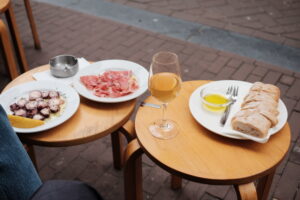
It fundamentally shifted who drinks wine and how. Previously reserved for white tablecloth dinners, wine became something for a younger, cooler cohort to socialise over, not unlike a beer. Where you might once have turned up to a party with a six pack, now a bottle of natural wine might take its place. Natural wines became synonymous with trendy bars: small plates of cheese precariously resting on stools, drinkers spilling outside across sidewalks, canals and parks. Steak dinners were swapped for paprika crisps and Gordal olives.
And of course, there’s the celebrity of it all. Action Bronson, popped up on people’s timelines sharing this new type of wine. He ate and drank his way around the 11th arrondissement of Paris with his “natural wine shaman” and made wine with cult winemaker Patrick Bouju. Today we regularly see Dua Lipa sharing curated lists of natural wine bars from London and Paris to Buenos Aires.
So what’s the problem here? We love a silly little drink.
Now you may be thinking, isn’t that just the cost of making a product well? And yes, wine that’s grown and harvested sustainably, at a smaller scale and with good labour conditions is going to cost more. Plenty of winemakers are seriously invested in biodynamic farming, hand-picking for quality and low-intervention winemaking, and they’re charging the appropriate price for it. But that’s not the point of contention. The problem is the mismatch: there’s a brand of natural wine that sells itself as fun, good-time wine, and those bottles also start upward of 30 quid. Premium wine can be premium wine. We just don’t need to pay 30 quid for cartoon wine.
We’ve entered the performative wine era
Wine has always been a bit of a personality test. What’s in your glass, where it came from, who made it, how it was farmed and how cool the label is all say something about who you are and what you stand for. Enter the performative wine drinker: a corporate creative who wears the right clothes, furnishes their home with perfectly curated vintage furniture and, notably, drinks the right wines. As natural wine grew in popularity, it was diluted from its countercultural roots into an amorphous status signifier for people performing “good taste”. It became fashionable, so people engaged with it on those merits alone.
So, who is natural wine for today?
Natural wine has a bit of a split personality these days. It began as the friendly alternative to an increasingly commercialised wine world, but along the way it picked up a “you can’t sit with us” reputation. The stereotype is now more of a running joke than a real barrier. The price tag is harder to laugh off. In a time of cost of living squeeze, a juicy, “approachable” Gamay for 30 quid to drink at the park just doesn’t make sense. Plenty of drinkers value small production, terroir and minimal intervention, but those values aren’t always attainable at current prices.
Still, natural wine hasn’t entirely lost its sparkle. Winemakers, critics and bar owners remain focused on the core of low-intervention winemaking: farming, the land, sustainability and artisanal craft, even if all that care tends to come at a premium. Wine may fall in and out of fashion, but, as we all know, talking shite over a few drinks with your mates never goes out of style. Beanie optional.