Do Neighbourhood Restaurants Still Exist?
Words: Luxmi Shanmuganantha
Image: Reggie’s Pizzaria
Everyone and their granny is opening a neighbourhood restaurant these days. We seem to have moved on from naming restaurants after our granny (still tastefully mentioned on the menu, of course) to opening charming, simple spots tucked away in our villages and main streets. This is all fine and well, we’re not immune to the joys of a local haunt, but why do you need to book three weeks ahead to eat in yours?
The rise of the neighbourhood restaurant
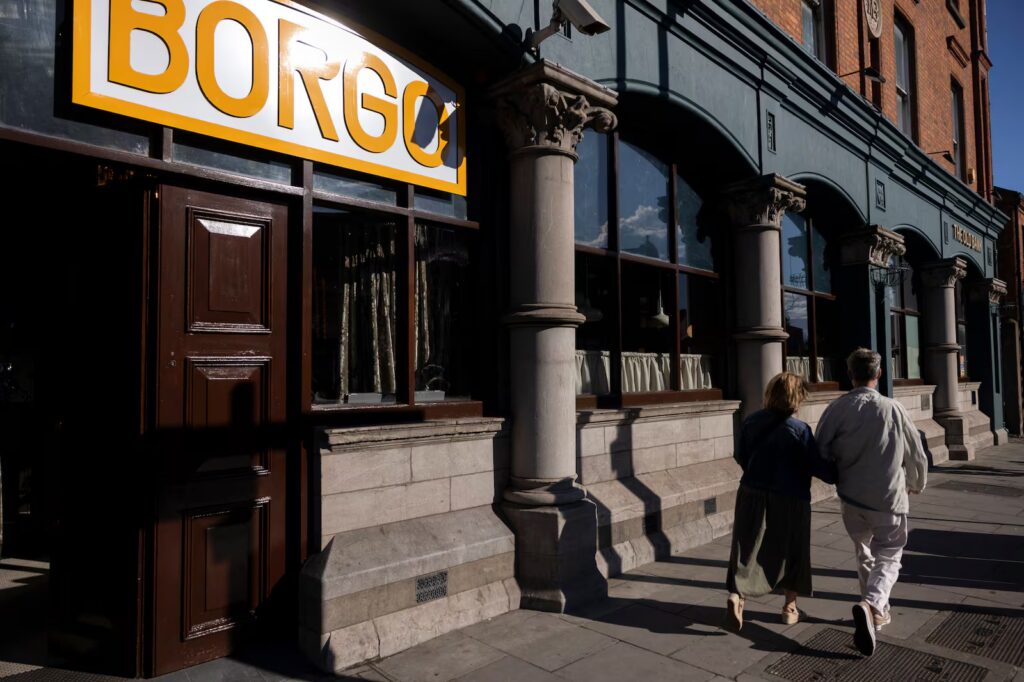
The past few years have seen a proper wave of neighbourhood restaurants across Dublin. We got Hera in Drumcondra, Caladh in Greystones, Borgo in Phibsborough and Fuoco in Ranelagh, following early pioneers like Woodruff and Volpe Nera (shout out to the OGs). It’s an evolution from destination spots in the city centre to more local, casual places that, in theory, serve the people who live around them. Short menus, seasonal everything, rooms that don’t make you whisper. But with so many openings branding themselves as “neighbourhood” spots, it’s worth asking: if you need to book three Wednesdays in advance, is that really your neighbourhood spot?
So what actually is a neighbourhood restaurant?
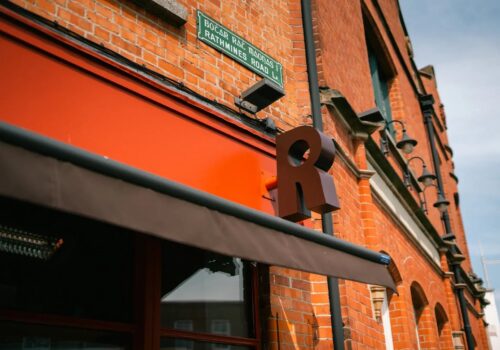
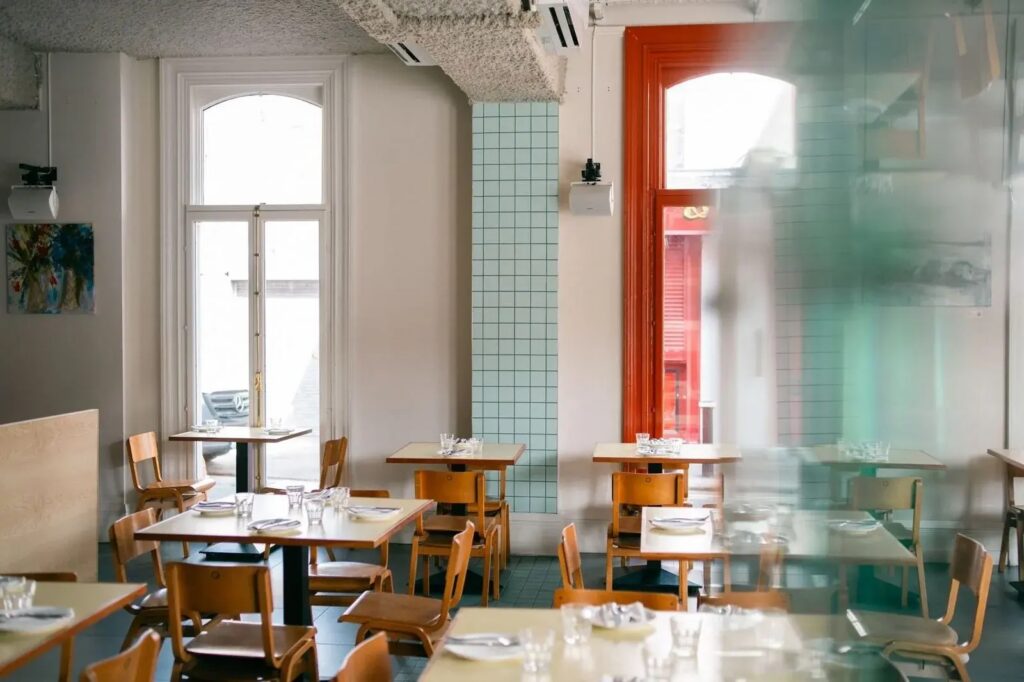
What first comes to mind is something more continental: a French bistro, an Italian trattoria, a Spanish tapas bar. We have Tábla, Blackrock’s version of a French bistro, and Reggies, a neighbourhood pizzeria in Rathmines. Think regulars, repeat custom, relaxed, unfussy. The restaurant equivalent of a comfy pair of jeans. Somewhere for an uneventful but lovely evening, inexpensive and easy to get into. The term itself is a fairly recent addition to our vocabulary, used by critics and writers to separate the local places you return to weekly from the destination and special-occasion spots.
Lately, many of these places have come from ambitious chefs opening laid-back spots outside the centre, with local produce and a small menu done really well. Think Chubby’s in Clontarf, Mongoose in the Liberties or Cora in Lucan. In spirit, they’re neighbourhood spots: they serve their communities and cook honest, delicious food… and the problem is everyone knows it. Have you ever tried to get a booking at Chubby’s?
These places are so good they’ve outgrown the neighbourhoods they were meant to serve. Lovely problem to have, unless you live round the corner and fancy a plate of pasta on a whim. They’re well worth the travel, but if people are travelling, does that not make them destination spots?
Introducing: the Neighbourhood Restaurant Triangle
Part of the struggle is we are greedy diners! We want great food and fair prices, but we also want to be able to walk in. And the pressures are real. Rising costs make it hard for restaurants to stay affordable even outside the centre, which makes it hard for people to go out often enough to become regulars. Walk-ins are a dream, but for many restaurants bookings are essential because they offer a certainty that walk-ins can’t. And with housing more precarious, people don’t even get the chance to become regulars.
Which brings us to our theory *clears throat*: the Neighbourhood Restaurant Triangle.
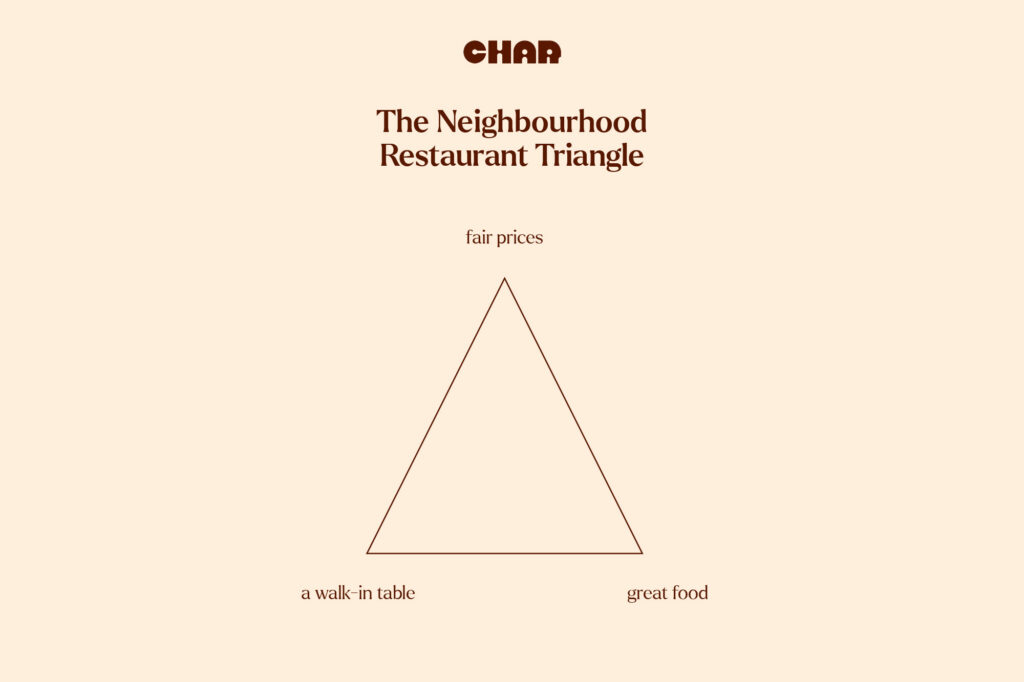
Fair prices. Great food. A table you can walk into. Pick two.
Good and affordable? Booked out till Christmas.
Affordable and easy to get into? Probably because the food’s a bit meh.
Brilliant with tables to spare? Check the prices.
A place that nails all three is a unicorn. Guard it with your life (sorry some things have got to be gatekept).
But were neighbourhood restaurants of the past just affordable and easy to get into? Like were our parents raving about the seasonal rotation of fresh veg from a farm outside the city served with zippy dressings and natural wine? Probably not, but it wasn’t really just about the food. You were going for a friendly face who knows your glass of red before you sit down, a ten-minute stroll from your couch, and a table on a random Wednesday when you can’t face the hob. Is that enough? Or can we have it all?
So what’s fueling this shift in neighbourhood restaurants?
Obviously we have some thoughts…the city is growing, and its food scene is keeping pace, a few things are feeding this trend:
Post-covid people like to dine closer to home
Where it used to be more fun and common to head into town for a night out, diners today seem less interested in doing that (or at least less often). Restaurants in neighbourhoods outside the city centre have really cropped up post-covid to meet the desire to stay more local. Another factor feeding this could be that more people have moved further out which can sustain more restaurants outside the city.
Hospitality is squeezed on all sides
It’s no surprise that restaurant margins, already tight, seem to just be getting smaller. The neighbourhood restaurant is a banger of an idea on paper: cheaper rent outside the centre, a price-friendly menu, and nobody needs a second mortgage for a starter. We love a chipper, but sometimes a Wednesday calls for a tablecloth and someone else doing the dishes.
The middle tier restaurant is fading
Restaurants today are either more elevated or more casual, those middle spots are what we are losing (neighbourhood restaurants). Going out for mediocre food is honestly expensive, and in this economy? Truly nothing worse than spending fifty quid on a meal that tastes like it’s come out of the freezer. It makes sense that people are more intentional about where they go to eat out. Those nicer meals may be planned in advance and booked further out, whereas more spontaneous trips are saved for fast and casual spots. This definitely relates to the rise of food trucks in pubs, fast food spots and the cafe boom in Dublin. There’s much lower stakes to grabbing a slice of pizza or croissant than a spontaneous steak and pasta dinner.
So if people are heading to a neighbourhood spot, it will need to be bangin…. and they probably will just book ahead.