How Guinness Found A Second Home In Nigeria
Tobi Ilori: Words
Guinness started at St James’s Gate. In Nigeria, it found a second home: bottled, stronger, louder, and never too far from pepper soup, plantain and loud football debates.
Growing up a Nigerian Irish kid, Guinness was always somewhere nearby. At home in Ireland, it turned up at college parties and night outs at my local pub.
Back in my grandparent’s house in Lagos, it was even more present on hot days, casual chats, family gatherings where nobody has officially said it was a party yet but there are already white plastic chairs outside, music playing, and someone carrying a crate ready to share with us and with the kind grin that told you the night was going to be hectic.
My uncles drank it like water. Or at least, that is how it looked to me as a child. There would be buckets of the bottled stuff on ice, dark glass sweating in the heat, the label peeling slightly. The bottle was familiar to me long before I understood everyone took it so seriously.
To be clear, Nigeria is not exactly short on great drinks. Do not get me started on the greatness of Supermalt. That deserves it’s own national essay and I will return to it when the time is right.
But Guinness had a different kind of place. It felt ceremonial without being delicate. Serious without being quiet. The drink that appeared when people were celebrating, arguing, laughing, eating, greeting someone who had just arrived, or settling into the middle of the night when the event had stopped pretending it was going to end soon.
Then I got old enough to drink it myself. The first bottle nearly folded me.
This Is Not The Same Guinness You Sip In A Dublin Pub
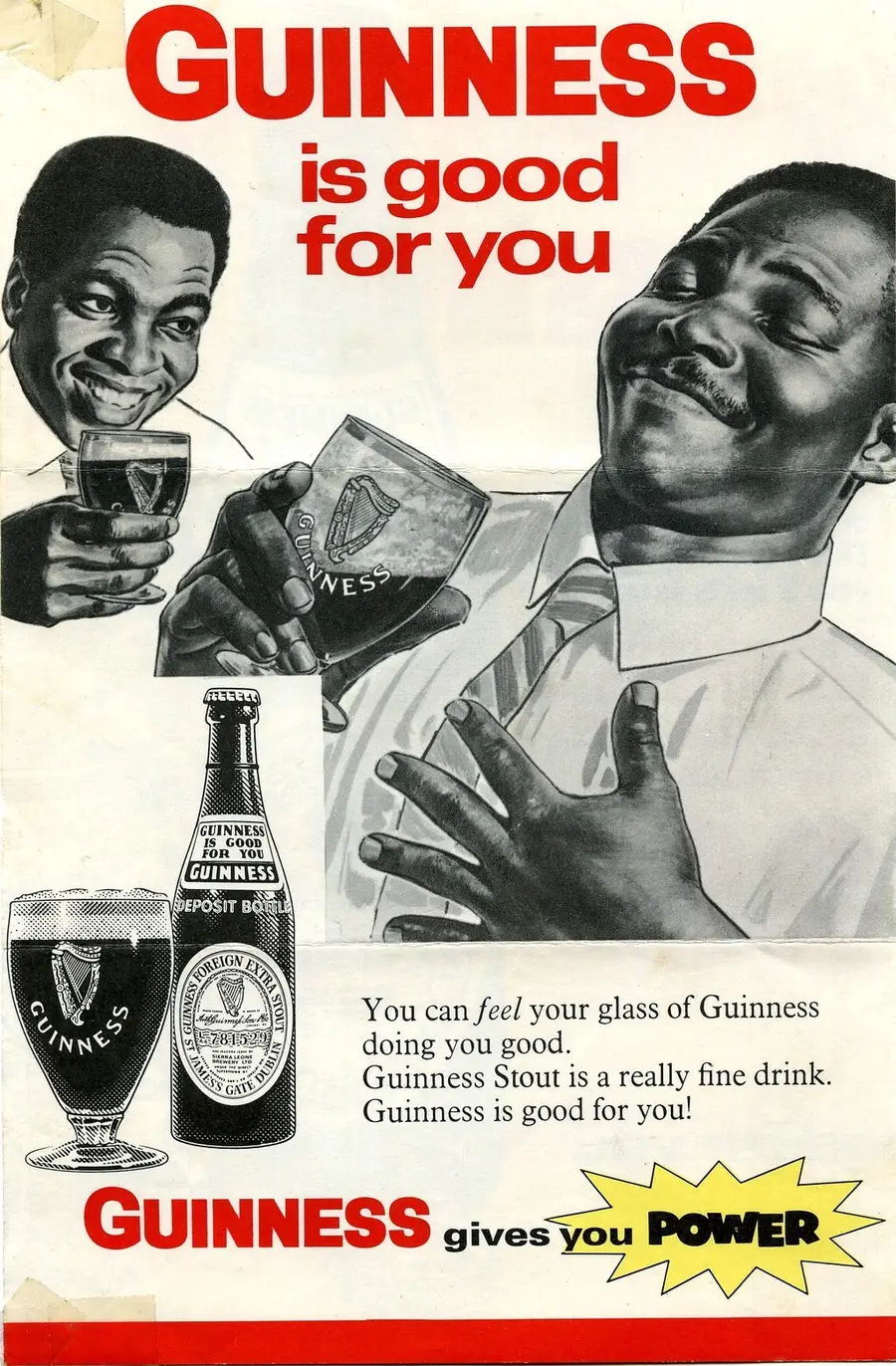
Irish Guinness and Nigerian Guinness do not feel like the same emotional or tasting experience be warned.
In Ireland, people talk about Guinness through the pint. Meaning the pour. The dome. The settling. The pub that “does a good one.” Someone’s uncle insisting it tastes different once you leave Dublin, based on nothing but confidence and several decades of bar experience.
In Nigeria, the image is the bottle. Foreign Extra Stout is stronger and sharper and comes in a darker glass. This means more weight in your hand as you hold it and more heat around it too.
Guinness Foreign Extra Stout is 7.5% ABV, and the people at Guinness themselves says it was brewed with extra hops to preserve the beer during long voyages through tropical climates. So yes, let me warn you now. If your only reference point is a creamy pint in Ireland, Nigerian Guinness will absolutely humble you. I say that with love.
The Crate In The Corner

Nigeria plays a significant role in the storied history of Guinness, far exceeding a minor mention. According to the brand they began brewing in Ikeja, Nigeria in 1962 and the country went on to become their second biggest market after UK.
What that means is it’s not a foreign beverage appreciated from a distance. It evolved into a local staple that is commercially significant, deeply familiar, and sits right at home with the culture there.
The stout became a part of daily life. The ever present crate in the corner and the bottle on the table. It also serves as the silent witness to spirited debates over football, politics, and when your relatives ask for the 100th time why you are still not married yet. If you ever find yourself in Lagos Odeku is the word for the big stout and Lanko for the smaller one but you can just ask for a Guinness and they will understand what you mean so no problem there.
Indeed, at any Nigerian gathering, you are certain to find a uncle clutching a Guinness with the gravity of someone prepared to give a speech and more often than not, he is about to do exactly that. Just take anything he says with a heavy pinch of salt. Possibly two.
Suya Would Bully A Softer Drink
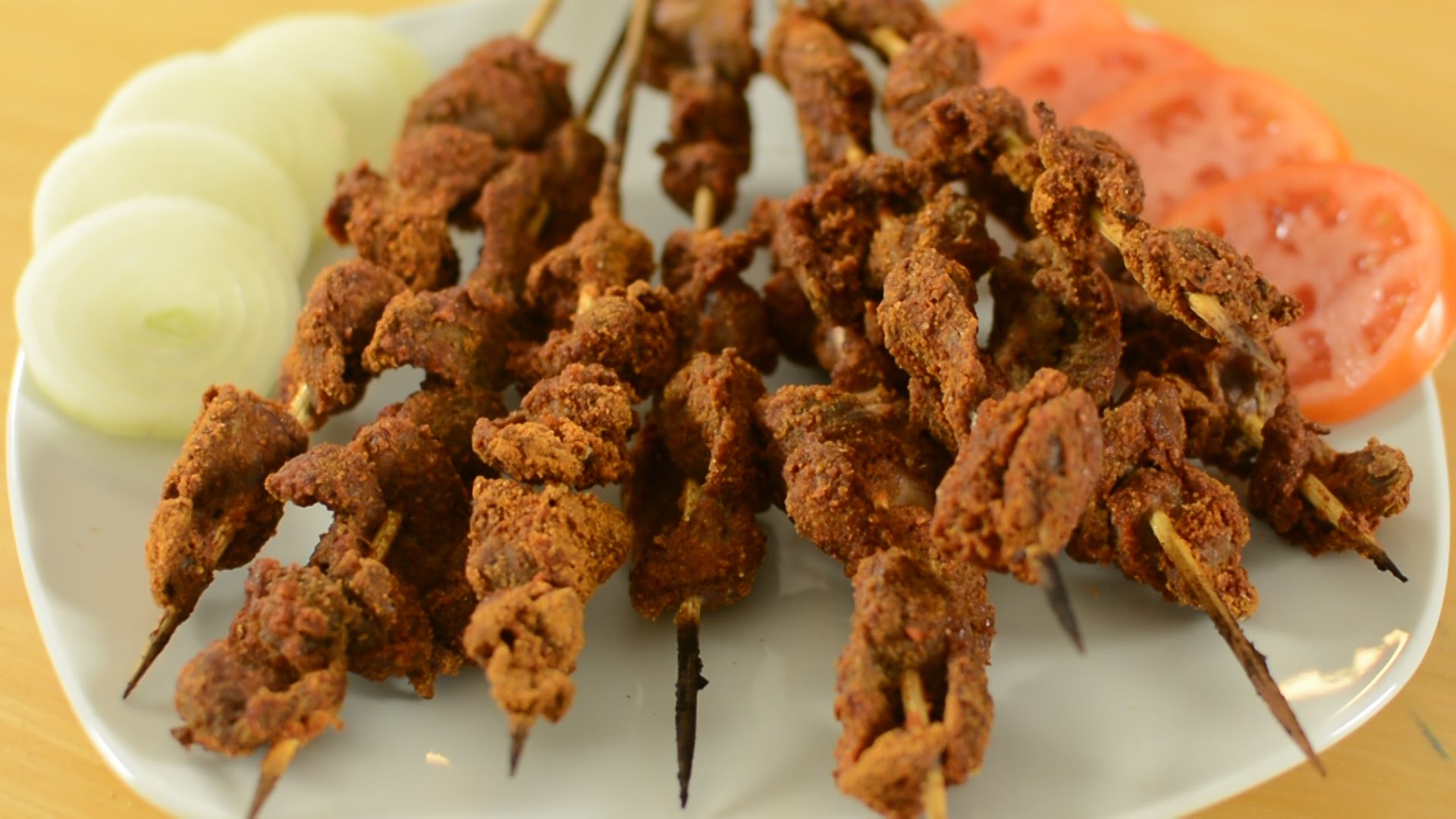
As a food journalist, I would be doing a shite job not mentioning the ideal companions for a bottle of Nigerian Guinness.
Prepare your palate for some serious heat, because this drink is best paired with heavy hitters: Pepper soup, Suya, Nkwobi, and Asun. Right beside it are than grilled fish or a plate of party jollof with chicken that has undergone extensive seasoning and character development.
We are talking about food that is loud, smoky, oily, and spicy.
Because Nigerian Guinness is heavier, sweeter and fruiter it can hold its own against dishes that are notorious for needing something that has a real flavour profile to pair with it. While a lighter beverage might vanish in the presence of such bold flavours, Guinness cuts right through the pepper and embraces it. It is a natural fit for meat, intense spice, and the kind of meal that demands a moment of silence after every few bites.
In Ireland, you might find Guinness paired with oysters, a hearty stew, or a simple toasted sandwich classic, all flawless combinations. However, in Nigeria, the stout seeks out a plate that is ready for a bit of a fight on your tongue.
What One Bottle Can Carry
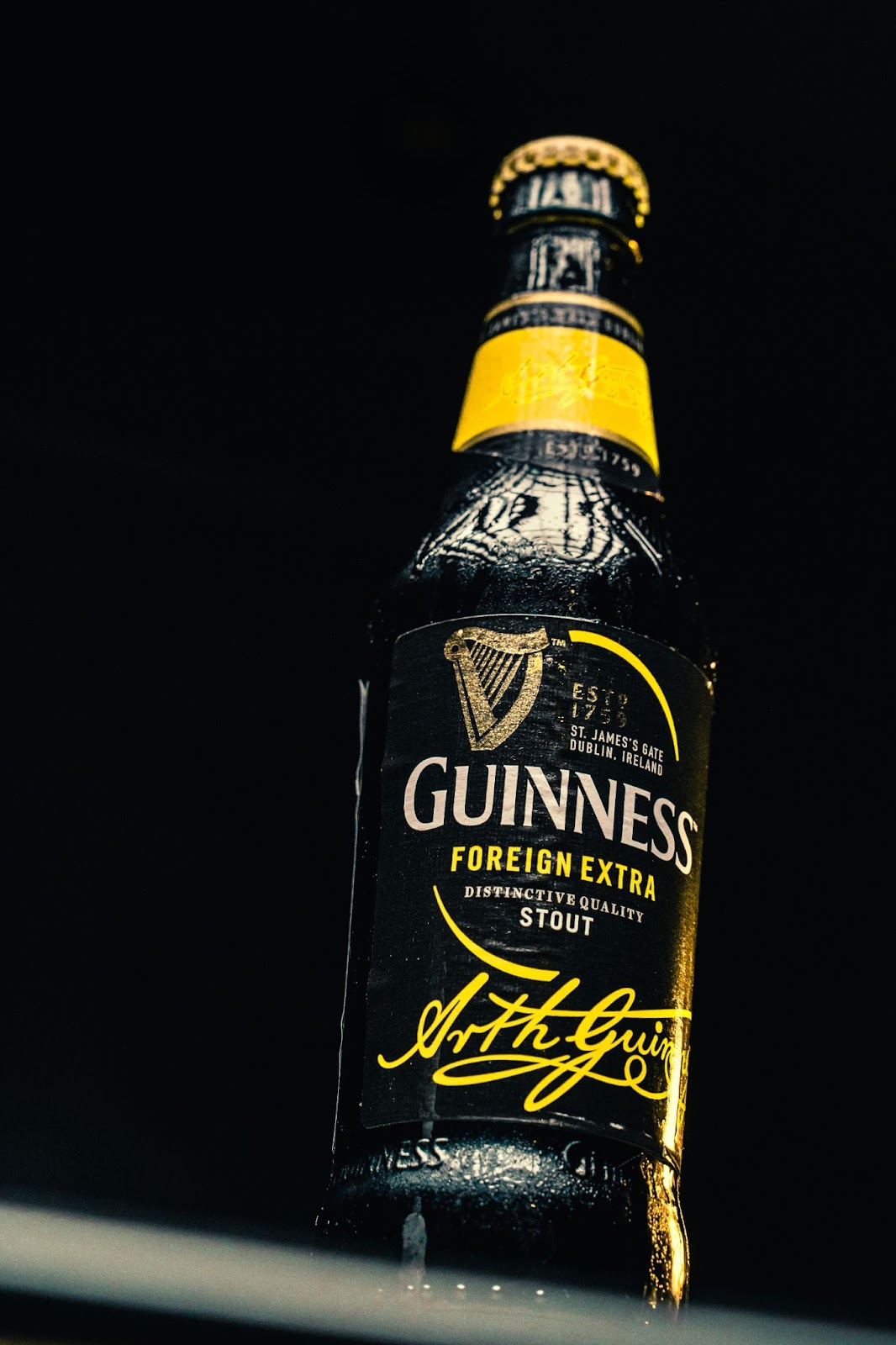
For Nigerians in Ireland a bottle of Nigerian Guinness can carry two places at once.
In Ireland, a good pint makes me think of my family’s compound. The bustling and chaotic markets. The heat. In Lagos, the bottle makes me think of Ireland and how much I’m weirdly grateful for the more wetter and colder weather. The pubs. The first sip of good pint when the pour is just perfect.
The taste are diffrent. The setting is diffrent. The people around it are diffrent. Yet somehow the line between both home gets shorter with each sip. That is the part my heart loves the most.
If a Nigerian friend, me or any other African ever offers you the chance to try Nigerian Guinness make sure you try it. Scouts promise it will change the way you see Guinness forever.
Do not treat it like a novelty taste test at a kitchen counter. Have it with food than have it with people. Let someone warn you that it is stronger. Ignore them slightly. Regret that. Come back with respect.
Because the bigger story is not really about who owns Guinness best. It is about how one drink can sit between two cultures and feel at home in both.
Irish and African connections show up in all sorts of places now: music, food, sport, pubs, weddings, kitchens, group chats, family tables. Sometimes they show up in a dark bottle of stout being opened at exactly the right moment.
Guinness began in Dublin.
Nigeria gave it Ìwọn didun (volume).